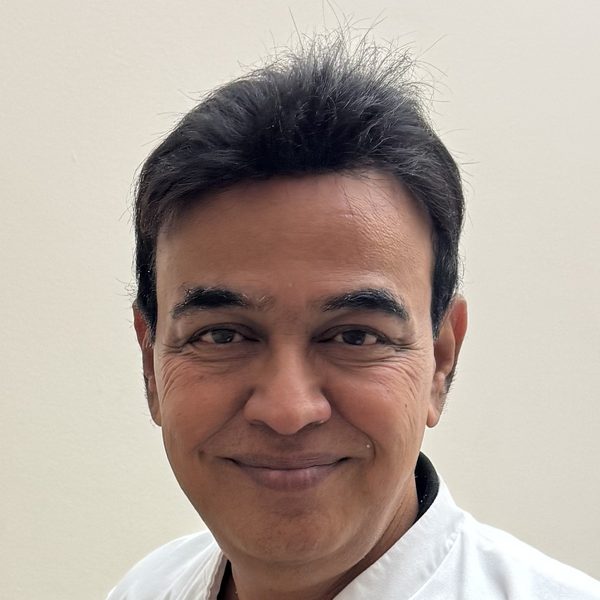
Dr Abdul Mannan Baig

Our people

Dr Abdul Mannan Baig

MBBS, PhD

Medical doctor and scientist in COVID-19 and long COVID. Board Member, Vitalis Foundation.

  • Long COVID
  • Neuro-COVID
  • Drug repurposing
  • Neuroinvasive infections

Dr Abdul Mannan Baig is a medical doctor and scientist whose work sits where infection meets the nervous system. He was among the first researchers in the world to argue, in early 2020, that SARS-CoV-2 can reach and damage the brain, and one of the earliest to push for long COVID to be recognised as a distinct chronic illness.

Today his research centres on long COVID: what drives it, how to diagnose it and how to treat it. He joined the Vitalis Foundation board in South Australia in 2026.

Research impact

5,500+
Citations of his work
3,100+
Citations of his most-cited paper
~90
Publications: articles, reviews, editorials and book chapters
35+
Papers on COVID-19 and long COVID
21
h-index
44
Papers cited 10 or more times (i10-index)

Figures from Google Scholar, November 2026, counting only Dr Baig's own papers.

Qualifications

  • MBBS, PakistanA qualified medical doctor, he began his clinical career as a Medical Officer in the Department of Medicine, and as a Demonstrator in Pathology and Anatomy, at Liaquat Medical Hospital, Jamshoro.
  • PhD, University of Sunderland, UK (2020)His thesis identified new drug targets in brain-infecting amoebae and made the case for repurposing existing medicines to treat these infections.

Career

  • Aga Khan University, Karachi, PakistanSenior Instructor-Researcher, Department of Biological and Biomedical Sciences, where he led a research group working with collaborators around the world.
  • Germany, 2023–2026Long COVID research at clinical centres in Bad Aibling, Bavaria. Lead researcher at the Institute for Long Covid and Chronic Illness, July 2025 to January 2026.
  • Vitalis Foundation, 2026–presentBoard member, South Australia.

His contribution to COVID-19 and long COVID science

2020

Showing that COVID-19 can affect the brain

Weeks into the pandemic, Dr Baig and colleagues published Evidence of the COVID-19 Virus Targeting the CNS in ACS Chemical Neuroscience. It mapped where the virus's entry receptor, ACE2, is found in nervous tissue, proposed routes by which the virus could reach the brain (including through the nose), and called for COVID-19 to be staged by how far it affects the nervous system. The University of Sunderland credits it as the first paper to flag loss of smell and taste as significant COVID-19 symptoms. It has been cited more than 3,100 times.

2020

Naming long COVID as a chronic illness

He proposed the term Chronic COVID Syndrome for patients who stay unwell long after infection, and set out how the virus's effects on the brain could explain their lasting symptoms. These papers have been cited more than 550 times.

2021–2024

Invited by leading journals

Nature Reviews Neurology commissioned him to write on the neurological cost of COVID-19. In 2024 he co-authored a Lancet Neurology paper making the case that SARS-CoV-2 infection is a cause of neurodegeneration.

Today

Causes and treatments of long COVID

His recent work covers how long COVID develops and how it can be diagnosed and treated, the role of autoantibodies against the body's own nerve-signalling receptors, the virus's effects on the immune system (including lymphopenia and autoimmunity), and delivering treatment through the nose to reach the brain. He is a regular speaker at international long COVID conferences, including the Long Covid Coalition Congress.

Beyond COVID-19: brain infections, drug repurposing, cancer and brain injury

Before COVID-19, Dr Baig specialised in microbes that invade the brain, including the "brain-eating" amoebae Naegleria fowleri and Acanthamoeba, which cause rare but often fatal infections. He used computational biology, protein modelling and drug-docking methods to find weak points in these organisms, and tested existing approved medicines against them. Over eight years he published more than 55 papers in this field. That grounding in neuroinvasive infection, and in repurposing existing drugs, is what he brought to COVID-19 from its first weeks.

The same drug-target approach runs through his other work. In cancer, he has studied muscarinic M1 receptors in prostate cancer and searched for conserved protein targets in androgen-independent prostate cancer cells. In traumatic brain injury, he has co-authored studies of new thalidomide-like anti-inflammatory drugs that reduced inflammation and brain injury (2022, 2023 and 2025).

Recognition

National Award of Distinguished ScientistPakistan Scientific Society
Most Productive ResearcherAga Khan University, 2017–2020

Selected publications

Citation counts from Google Scholar, November 2026.

  1. Evidence of the COVID-19 virus targeting the CNS: tissue distribution, host–virus interaction, and proposed neurotropic mechanismsBaig AM, Khaleeq A, Ali U, Syeda H. ACS Chemical Neuroscience, 2020
    3,133 citations
  2. Neurological manifestations in COVID-19 caused by SARS-CoV-2Baig AM. CNS Neuroscience & Therapeutics, 2020
    423 citations
  3. Chronic COVID syndrome: need for an appropriate medical terminology for long-COVID and COVID long-haulersBaig AM. Journal of Medical Virology, 2021
    392 citations
  4. Deleterious outcomes in long-hauler COVID-19: the effects of SARS-CoV-2 on the CNS in chronic COVID syndromeBaig AM. ACS Chemical Neuroscience, 2020
    187 citations
  5. Potential neuroinvasive pathways of SARS-CoV-2: deciphering the spectrum of neurological deficit seen in COVID-19Baig AM, Sanders EC. Journal of Medical Virology, 2020
    179 citations
  6. Counting the neurological cost of COVID-19Baig AM. Nature Reviews Neurology, 2021
    37 citations
  7. SARS-CoV-2 infection as a cause of neurodegenerationBonhenry D, … Baig AM, et al. The Lancet Neurology, 2024
    29 citations
  8. Unraveling the enigma of long COVID: novel aspects in pathogenesis, diagnosis, and treatment protocolsBaig AM, Rosko S, Jaeger B, Gerlach J, Rausch H. Inflammopharmacology, 2024
  9. Strategic inhibition of CHRM autoantibodies: molecular insights and therapeutic potentials in long COVIDBaig AM, Rosko S, Jaeger B, Gerlach J. Journal of Medicinal Chemistry, 2025
  10. Targeting neuroinflammation: 3-monothiopomalidomide, a new drug candidate to mitigate traumatic brain injury and neurodegenerationHsueh SC, … Baig AM, et al. Journal of Biomedical Science, 2025
    13 citations
  11. Differential receptor dependencies: expression and significance of muscarinic M1 receptors in the biology of prostate cancerBaig AM, Khan NA, Effendi V, Rana Z, Ahmad HR, Abbas F. Anti-Cancer Drugs, 2017
    33 citations
  12. In vitro efficacies of clinically available drugs against growth and viability of an Acanthamoeba castellanii keratitis isolateBaig AM, Iqbal J, Khan NA. Antimicrobial Agents and Chemotherapy, 2013
    77 citations